

UK subsidence claims surge after hottest summer on record
Click here to read the news item (The Guardian)
UK subsidence claims: A-level economic analysis
Hot, dry weather can shrink clay soils, causing subsidence and increasing insurance claims. This raises costs for insurers and homeowners, while increasing demand for repair services.
Insurance firms face higher payouts and administration costs. If claims remain high, they may raise premiums, increase excesses or refuse cover for high-risk homes. This reduces households’ real disposable income because more income is spent on insurance.
Demand for surveyors, engineers and specialist repair firms rises. In the short run, supply is price inelastic because training skilled workers and obtaining specialist equipment takes time.

Therefore, demand shifting from D1 to D2 is likely to cause a relatively large increase in repair prices, from P1 to P2, but only a small rise in output.
Affected properties may fall in value as buyers anticipate repair costs, insurance difficulties and future risk. This can make homes harder to sell or remortgage. However, insurance protects many households by spreading repair costs across policyholders.
Climate change is a negative externality. Carbon-intensive production and consumption create social costs, including future property damage, higher insurance costs and public spending on adaptation.
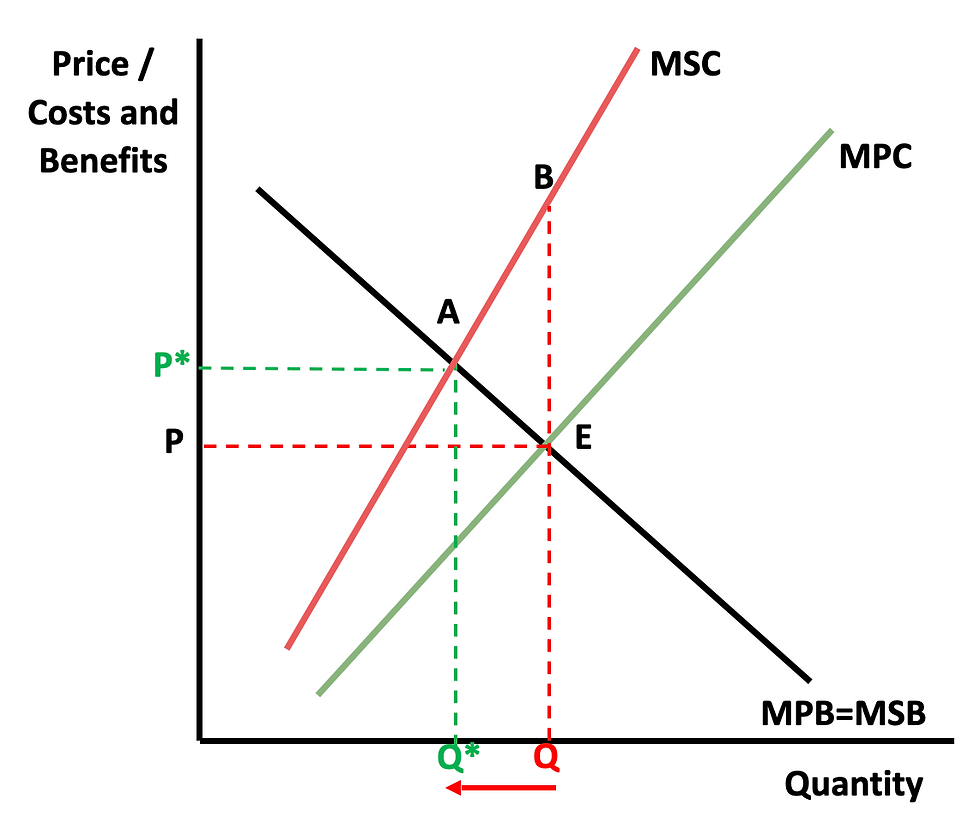
These costs are not fully included in market prices, so output is above the socially efficient level: Qm rather than Qs. The welfare-loss area shows the inefficient overconsumption or overproduction.
The government may respond by investing in adaptation, such as stronger building standards and climate-resilient infrastructure. It could also reduce emissions through carbon taxes, regulation, subsidies for low-carbon energy or emissions trading. However, adaptation has an opportunity cost: spending on resilience cannot also be spent on services such as healthcare or education.
The main short-run effects are likely to be higher insurance and repair costs. The scale depends on the number of homes affected, availability of skilled workers, insurance coverage and whether hotter, drier summers become more frequent. Subsidence also depends on local factors, including soil type, trees, drainage and property design; therefore, climate change is a contributing risk rather than the sole cause.
Overall, as a student, you must try to link the effects to each of the economic stakeholders. The article shows how climate-related risks create microeconomic costs for households, insurers and repair firms, alongside wider fiscal costs and market failure.


Comments